Your Plus-One or Mine? The Calculated Art of the Hollywood Red Carpet Stand-In
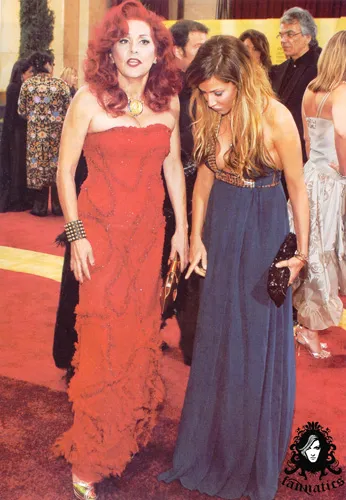
Photo: Unknown authorUnknown author, CC BY-SA 4.0, via Wikimedia Commons
Let's set the scene. A major star walks the red carpet at their film's premiere. They look incredible — the stylist has clearly earned their rate. They're charming, they're quotable, and at their side is someone who is… there. Present. Smiling. Photographed. Described in every outlet as a "close friend" or "longtime pal" or, the personal favorite of entertainment reporters everywhere, "a member of their inner circle."
Two months later, same star, different premiere. Same person. Same smile. Same mysteriously undefined relationship status.
This is not an accident. Almost nothing on a Hollywood red carpet is.
The Plus-One as PR Instrument
The strategic plus-one is one of the oldest and least-discussed tools in celebrity image management, and it operates on a surprisingly sophisticated set of unwritten rules. Who a star brings to a public event communicates a staggering amount of information — or, more precisely, is designed to communicate a very specific, carefully calibrated amount of information and no more.
Bringing a romantic partner to a premiere is a statement. It invites questions, confirms or denies relationship rumors, and creates a narrative that the star may or may not be ready to own. Showing up alone reads as either confidently single or conspicuously private, depending on the current tabloid cycle. But arriving with a trusted friend — ideally one who is charming on camera, photogenic, and absolutely will not say anything interesting to a reporter — splits the difference perfectly. You look warm. You look supported. You look like someone who has people. And you haven't told anyone a single thing about your actual life.
Publicists will rarely discuss this on the record, for obvious reasons. But the framework is well understood inside the industry. "The plus-one choice is never casual," one veteran entertainment PR professional told Variety in a 2022 piece about celebrity image management. "Every element of a red carpet appearance is considered. Who you bring is part of the message you're sending."
The Stand-In Archetypes
Not all strategic plus-ones are created equal. Over years of careful red carpet observation, a few distinct archetypes have emerged:
The Best Friend Shield — The childhood friend, the college roommate, the person whose presence signals authenticity and groundedness. Used most often when a star is trying to reframe their image as more relatable, or when they're fresh out of a public breakup and want to signal that they are fine, actually, and surrounded by love.
The Industry Ally — A fellow actor, director, or producer whose presence reads as a professional endorsement. Two stars arriving together at an awards show subtly reinforces both of their credibilities. It's a red carpet cross-promotion, and it works.
The Sibling Play — Bringing a brother or sister is the nuclear option of the "I'm not answering questions about my love life" strategy. It's wholesome, it's deflecting, and it generates exactly zero romantic speculation. Unless, of course, the tabloids are particularly desperate that week.
The Ambiguous Constant — This is the one people actually talk about. The person who appears at event after event, is always described in vague terms, and whose relationship with the star is never quite defined. Recent years have given us no shortage of examples — though naming specific current ones without confirmed reporting would cross from observation into speculation, which is a line worth respecting.
What's notable about the Ambiguous Constant is that their sustained presence often indicates one of two things: either they are, in fact, a romantic partner whose relationship the star isn't ready to confirm publicly, or they are a trusted confidant who has been specifically chosen because their presence generates just enough intrigue to keep the star in the conversation without revealing anything concrete. Both are valid strategies. Both are deliberate.
What the Stylists Know
Here's a detail that doesn't get nearly enough attention: the stand-in is often styled in coordination with the star. Not always to match — that would be too obvious — but to complement. Color stories are coordinated. Formality levels are aligned. The visual grammar of the pairing is considered.
This level of coordination requires the plus-one to be briefed by the styling team, which means they're embedded in the preparation process in a way that a truly casual friend wouldn't be. They know the look. They know the talking points. They know where to stand and, crucially, where not to stand when the photographer calls for a solo shot.
This is not the behavior of someone who got a last-minute text. This is someone who has been integrated into the event's production.
The Romantic Life They're Not Discussing
The most interesting question the strategic plus-one raises isn't who they are — it's what they're covering for. Hollywood has a long, complicated history with privacy, particularly around romantic and sexual identity. The managed plus-one has historically served as a tool for stars navigating relationships they weren't ready — or weren't safe — to make public.
In earlier decades of the studio system, this was formalized and often coercive — stars were assigned companions by their studios for public appearances, with their actual relationships kept entirely hidden. The modern version is more autonomous but operates on similar logic: control the image, protect the reality, manage the reveal on your own timeline.
For stars in same-sex relationships who aren't yet out, for those in relationships with significant age gaps or other tabloid-bait dynamics, or simply for those who've had their private lives publicly shredded before and are understandably gun-shy, the strategic plus-one offers a buffer between who they are and what the public gets to see.
That's not cynical. That's self-preservation in an industry that has historically punished honesty about anything that deviates from the expected.
The Audience Isn't Fooled
Here's the wrinkle in all of this: it doesn't really work on anyone paying attention. Fan communities — particularly the deeply engaged stan ecosystems on X (formerly Twitter), Tumblr, and Reddit — have developed genuinely impressive analytical frameworks for decoding red carpet dynamics. They track posture, proximity, the direction of gazes in photographs, the body language of introductions. They notice when the "just a friend" has been present at twelve consecutive public appearances spanning three years and two continents.
The strategy isn't designed to fool fans. It's designed to give mainstream media outlets nothing quotable to work with. There's a meaningful difference. The tabloids can't run "Star Confirms Relationship" without confirmation. They can, and do, run "Star Spotted With Mystery Companion Again" — which generates coverage without requiring the star to say a word.
It's a controlled information leak dressed up as a closed valve.
The Slow Burn Reveal
The most common endpoint of the sustained strategic plus-one story is, eventually, confirmation. The "close friend" becomes the acknowledged partner. The carefully managed ambiguity resolves into something public and real. And when it does, the preceding months of coordinated appearances suddenly recontextualize — what looked like friendship was courtship, or a long-established relationship finally ready to be seen.
Occasionally the opposite happens: the constant companion disappears from the red carpet entirely, replaced by someone new, and the cycle begins again.
Either way, the red carpet keeps rolling. The photographers keep shooting. And somewhere in a green room before the next premiere, a stylist is pulling two looks that happen to work very well together — purely by coincidence, obviously.
The next time someone shows up at five consecutive industry events with their "really good friend," you have full permission to raise an eyebrow — just know that eyebrow is exactly where they want it.