Born Into the Spotlight: Why Having a Famous Last Name Is Both a Golden Ticket and a Life Sentence
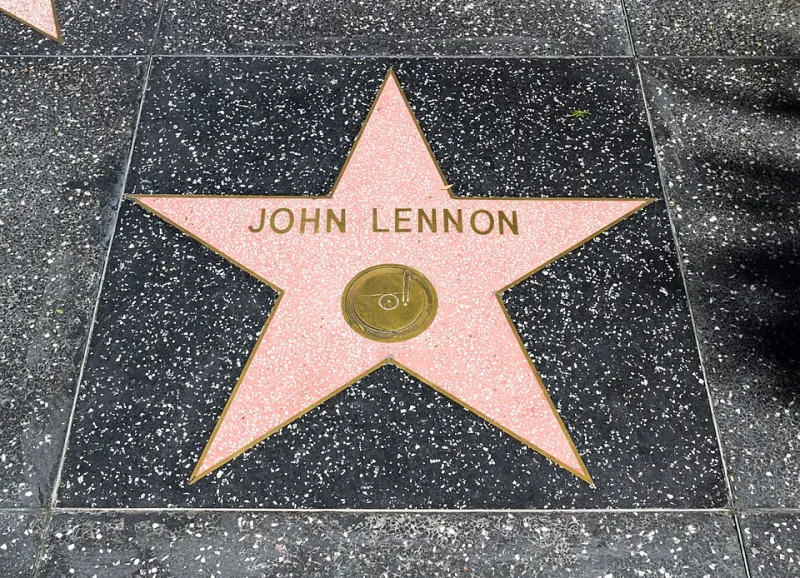
Photo: Dietmar Rabich, CC BY-SA 4.0, via Wikimedia Commons
Imagine your first job interview happening on a global stage. Imagine every early stumble being catalogued, compared, and held up against a standard that took your parent thirty years to reach. Imagine that no matter what you build, what you create, or what you achieve, there's always a parenthetical attached to your name in every headline, every review, every introduction at every industry event.
This is the inheritance that comes with being born into Hollywood royalty — and it's considerably heavier than it looks from the outside.
The Nepotism Conversation Nobody Wants to Have Honestly
Let's be clear about something upfront: nepotism is real, it is widespread in the entertainment industry, and it does confer genuine advantages. Access to agents, auditions, industry connections, and the kind of casual networking that happens at dinner parties most people will never be invited to — these are not small things. They matter enormously in an industry where who you know is often indistinguishable from how good you are.
But the conversation about celebrity nepotism tends to collapse into two equally unsatisfying positions. The first is the dismissive eye-roll — of course they got the role, look who their mother is — that flattens every nepo baby into a single story of unearned privilege. The second is the defensive overcorrection — they worked hard too, stop being jealous — that refuses to acknowledge the structural advantages at all.
Both positions miss what's actually most interesting about the phenomenon: the specific, strange, and often quietly brutal experience of trying to build a career in the shadow of someone who already defined what success looks like in your field.
The Door That Opens and the Ceiling That Drops
The famous-family advantage is real in the early stages. Names like Hemsworth, Kardashian, Springsteen, Hanks, and Presley carry weight that opens conversations, secures meetings, and generates press coverage that emerging artists without those surnames spend years trying to earn organically. Nobody in Hollywood is pretending otherwise.
But here's what gets discussed less often: the same name that opens the door also sets the expectations on the other side of it. When you share a last name with an Oscar winner, every performance you give is graded on a curve that was drawn by someone else. When your parent is a Grammy-holding musician with forty years of cultural capital, your debut single doesn't just have to be good — it has to justify the comparison that's already been made before anyone's pressed play.
The result is a peculiar kind of professional ceiling that has nothing to do with talent and everything to do with perception. Critics who might generously review an unknown artist's early work will apply a harsher standard to a famous person's child, either because they're overcorrecting for the privilege or because they're genuinely measuring against the wrong benchmark. Audiences, meanwhile, often can't separate their feelings about the parent from their experience of the child's work.
The Families Who Threaded the Needle
Some famous families have managed the multi-generational stardom challenge with remarkable grace. The Smiths — Will and Jada's children, Jaden and Willow — carved out genuinely distinct artistic identities, even if the path was turbulent and public. Zoë Kravitz built a career that now arguably outshines her famous parentage (daughter of Lenny Kravitz and Lisa Bonet, goddaughter of Jason Momoa), having landed roles in The Batman and Big Little Lies that are entirely her own. Miley Cyrus emerged from the Billy Ray shadow so completely that a generation of younger fans had to be told the connection.
But for every Zoë Kravitz, there are a dozen celebrity children who never quite escaped the parenthetical. Some quietly stepped back from entertainment entirely, building lives that the tabloids occasionally check in on with the faintly condescending tone of a wellness check. Others kept working steadily in the industry but at a level that always felt like it was being measured against a standard they didn't choose.
The Sibling Equation
The famous-sibling dynamic adds its own layer of complexity. When one member of a non-famous family suddenly becomes a global star, the siblings who remain outside the spotlight often face a version of the legacy paradox without any of the early-career advantages. They didn't grow up in the industry. They don't have the connections. But they carry the name, which means every professional interaction is filtered through someone else's fame — and not always in ways that help them.
Conversely, when one sibling in an already-famous family outpaces the others, the family dynamic shifts in ways that rarely get discussed publicly but that industry insiders observe constantly. The quiet recalibration of who gets the better meeting, the bigger introduction, the more favorable profile piece — it's a negotiation that happens in real time and mostly off the record.
What the Legacy Tax Actually Costs
The term "legacy tax" isn't about money, though there's a financial dimension to it too — the expectation that famous-family members will maintain a certain lifestyle, a certain level of visibility, a certain standard of success that reflects well on the family brand. The real tax is psychological and professional: the permanent condition of being defined by a relationship rather than a body of work.
Some celebrity children have spoken about this openly. Others navigate it privately, choosing to let their work speak without addressing the comparison directly — which is itself a strategy, and a reasonable one. But the comparison never fully goes away. It's in the headline. It's in the subtext of every interview question. It's in the first paragraph of every profile, no matter how clearly the journalist has been briefed to lead with the subject's own achievements.
The famous last name is a door. It's also a frame. And some people spend their entire careers trying to step out of it.
In Hollywood, you can inherit a spotlight — but you can't inherit what to do with it once you're standing in it.