Two Hours, Zero Answers: How Celebrity Interviews Became the Most Elaborate Magic Trick in Hollywood
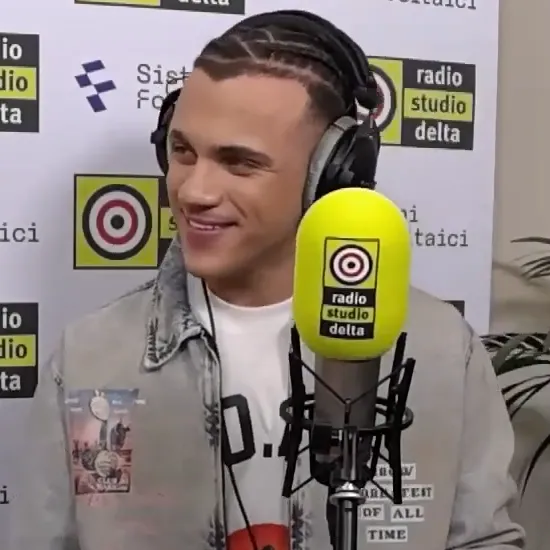
Photo: Radio Studio Delta, CC BY 4.0, via Wikimedia Commons
Something remarkable is happening in celebrity media right now. Stars are sitting down for longer, more intimate interviews than ever before — two-hour podcast sessions, sprawling magazine profiles, those charming Vogue video formats where someone answers 73 questions while walking through their suspiciously camera-ready apartment. The format signals vulnerability. The vibe is unfiltered. The promise, implicit in every casual laugh and off-the-cuff aside, is that you are finally getting the real person.
You are not getting the real person.
What you are getting is one of the most carefully engineered PR products in modern entertainment — a format so sophisticated that it has successfully convinced millions of viewers that watching a celebrity deflect for ninety minutes is the same thing as actually knowing them.
The Architecture of Fake Openness
Let's be precise about what the long-form celebrity interview actually is, structurally. It is a negotiated document. Before a single camera rolls, publicists and talent teams have typically established — in writing or in firm verbal agreement — which topics are off-limits. Recent legal matters. Specific relationships. Family members who haven't consented to be discussed. The new project's details that haven't been officially announced yet. The beef with that other celebrity that's still technically ongoing.
What remains after those exclusions is the territory the interview actually covers. And it's usually extensive enough that the final product feels comprehensive. The host — whether it's a journalist, a fellow celebrity, or a podcast personality with a pleasantly non-threatening vibe — works within that territory and creates the impression of depth by going long on the approved subjects.
The genius of the format is that more time doesn't equal more information. It equals more texture around the same information. You learn how the celebrity takes their coffee. You hear the anecdote about the difficult childhood they've already mentioned in four previous interviews, this time with a slightly different framing. You watch them get emotional about something that has been pre-approved for public emotion.
The Deflection Playbook, Annotated
Any attentive viewer of celebrity interviews will recognize the core moves on sight once they've been named.
The Pivot to Gratitude. Someone asks something uncomfortably specific. The celebrity pauses, smiles softly, and says some version of "I'm just really grateful for where I am right now." This communicates nothing while performing emotional depth. It cannot be argued with. It closes the thread.
The Reframe to the Work. The question is personal. The answer is professional. "That period was really hard, but it pushed me to create [album/film/collection] and I think the work speaks for itself." The implication is that the personal question has been answered through the art. It has not been answered at all.
The Strategic Partial Admission. This is the most sophisticated move in the toolkit. The celebrity admits to something — a struggle, a mistake, a difficult relationship — but keeps it just vague enough to be unverifiable. "I definitely wasn't in a great place." "There were things happening behind the scenes that people don't know about." "I made choices I'm not proud of." These statements feel like confessions. They are placeholders.
The Laugh and Redirect. The uncomfortable question gets a big laugh — genuine or performed, it doesn't matter — followed by a story about something tangentially related and completely harmless. The laugh signals that the celebrity is comfortable and self-aware. The redirect ensures the actual question never gets answered. The host, charmed by the laugh, usually follows the redirect.
The Emotional Moment (Scheduled). Almost every major long-form celebrity interview now contains a moment of apparent genuine emotion — a voice crack, a pause, eyes going glassy. These moments are powerful. They're also, more often than not, attached to a topic that has been pre-cleared for vulnerability. The tears are real. The selection of what gets cried about is strategic.
The Podcast Couch as PR Weapon
The format that has most successfully disguised its own construction is the celebrity podcast appearance. The aesthetic is deliberately casual — no studio lighting, branded coffee cups on the table, the host sitting close enough that it looks like a kitchen conversation. The whole visual grammar says off the record, even though it is, obviously, completely on the record.
Podcast appearances have become the preferred vehicle for controlled narrative rehabilitation specifically because they feel uncontrolled. When a celebrity goes on a popular podcast in the wake of a controversy, the extended run time and relaxed atmosphere create the impression that they're being held accountable in a rigorous way. They are being given ninety minutes to reframe the story in their own words with a host who was probably briefed on the restricted topics before the mics went live.
This isn't cynicism for its own sake — it's just accurate. Several podcast hosts have discussed, publicly and candidly, the pre-interview negotiation process with celebrity publicists. The restrictions are standard. The access is conditional. The warmth is real; the scope is managed.
Vogue's 73 Questions and the Illusion of Spontaneity
Special mention has to go to the format that has perhaps most elegantly solved the problem of making scripted content feel spontaneous: the rapid-fire question interview. Vogue's 73 Questions series is the gold standard — a celebrity answers dozens of questions in quick succession while moving through their home, the pace creating a breathless sense of unguarded authenticity.
The questions are submitted in advance. The answers are prepared. The walk-through is choreographed. The house has been styled. The whole thing is a single-take performance of spontaneity, and it works brilliantly because the format itself implies that there's no time to be strategic. There is always time to be strategic. That's what the prep call was for.
Why We Keep Watching Anyway
Here's the thing: none of this is a reason to stop watching celebrity interviews. They're entertaining. They're often genuinely charming. And occasionally — rarely, but genuinely — something unscripted slips through. A host pushes harder than expected. A celebrity gets caught off-guard by an emotional response they didn't anticipate. A piece of information lands that wasn't supposed to.
Those moments are electric precisely because they're real in a format designed to simulate reality. And chasing them is part of why we watch.
But going in with clear eyes about what the format actually is — a negotiated performance of intimacy, not intimacy itself — makes you a smarter consumer of celebrity media. You can enjoy the show and understand the trick at the same time.
The celebrity interview is Hollywood's most successful magic act: the one where the magician tells you exactly how the trick works and you still can't see it happening.
The next time a celebrity says "I've never talked about this before," check how many times they've said that exact sentence in previous interviews. We'll wait.