The Transformation Nobody's Talking About — Because Nobody's Allowed To
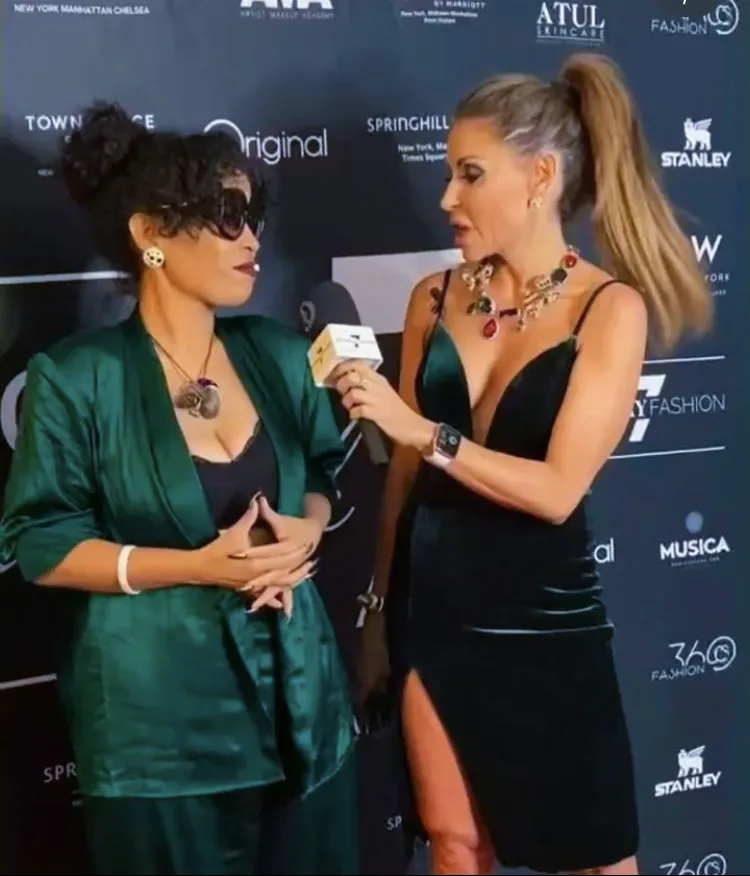
Photo: TamikaWest, CC BY-SA 4.0, via Wikimedia Commons
Something is different. You can't immediately pinpoint it, but you know it. The jawline sits differently. The skin has a particular smoothness that wasn't there before. The nose — wasn't it slightly different? You scroll back through old photos to check. You're not imagining it. And yet, when the interviewer inevitably asks about the glow-up, the celebrity smiles and mentions sleep, hydration, and "finally finding a skincare routine that works."
Welcome to one of Hollywood's most elaborate open secrets: the celebrity physical transformation that everyone can see, everyone is talking about in their group chats, and nobody in the professional media ecosystem is officially allowed to address.
The Architecture of Strategic Silence
The silence around celebrity physical transformations isn't accidental. It's engineered — a collaboration between the celebrity, their publicist, their management team, and sometimes the media outlets themselves, who understand that certain questions will get them cut off from future access.
The playbook is consistent across the industry. When a celebrity undergoes a significant physical change — whether through cosmetic procedures, dramatic weight shifts, or comprehensive aesthetic overhauls — their team typically does one of three things. They say nothing at all and let the photos speak while refusing to engage. They offer a vague, deniable alternative explanation (the skincare routine, the personal trainer, the "lifestyle change"). Or, increasingly, they get ahead of it with a carefully controlled partial disclosure — acknowledging one thing to avoid being asked about everything else.
What they almost never do is give a straight, complete answer. And the reasons why are more complicated than simple vanity.
Why the Silence Exists — and Who It Protects
The most immediate answer is legal and financial. Cosmetic surgeons operate under strict confidentiality agreements. Clinics that treat celebrity clients have NDAs built into their intake paperwork. A celebrity who confirms a procedure is implicitly confirming a business relationship that the other party cannot legally discuss, which creates an asymmetry that most celebrities prefer to avoid entirely.
But beyond the contractual dimension, there's a more human reason for the silence: judgment. Despite living in a cultural moment where cosmetic procedures are more normalized than they've ever been — where Botox is discussed casually at brunch, where lip filler is a topic covered in mainstream women's magazines without a trace of shame — there remains a specific, pointed scrutiny reserved for celebrities who admit to having work done.
The criticism cuts in multiple directions simultaneously. Admit to procedures and you're accused of being fake, of setting unrealistic beauty standards, of being insecure. Deny them and you're accused of lying to your fans, of perpetuating the exact unrealistic standards you'd be criticized for setting either way. The double bind is almost perfectly constructed, and the silence is often a rational response to an irrational situation.
The Weight Loss Conversation's Specific Minefield
The introduction of GLP-1 medications like Ozempic and Wegovy into mainstream culture added a new and particularly charged dimension to this conversation. When multiple high-profile celebrities appeared significantly slimmer over the course of 2023 and 2024, the speculation was immediate and widespread. The denials were equally swift — and frequently not believed.
The Ozempic conversation is uniquely fraught because it sits at the intersection of medical privacy, class dynamics (the medications are expensive and not universally covered by insurance), and deeply ingrained cultural attitudes about weight and willpower. For a celebrity to confirm using a weight-loss medication is to invite a specific kind of moral judgment that conflates the medical with the personal in ways that admitting to, say, rhinoplasty simply doesn't.
And so the silence continues, even as the before-and-after photos circulate, even as the comment sections fill up with the same speculation that the publicists are simultaneously trying to suppress.
What Tabloids Can and Can't Say
The media ecosystem around celebrity physical transformation has developed its own elaborate set of workarounds. Tabloids that want to cover the story without exposing themselves to legal risk have become fluent in a specific language of implication. Headlines that ask questions rather than make statements. Photo comparisons presented as "style evolutions" rather than physical analyses. Expert quotes from cosmetic surgeons who have never treated the celebrity in question and are therefore free to speculate based on photographs.
This creates a peculiar situation where the story is being told — loudly, widely, in millions of page views — while also technically not being told at all. The celebrity's team can truthfully say that no credible outlet has reported the claim as fact. The outlets can say they were only asking questions. And the reading public is left doing the math themselves, which they were going to do anyway.
The Authenticity Paradox
Here's the tension at the center of all of this: celebrity culture has never demanded more authenticity from its subjects, and it has never made authenticity more expensive to provide.
Audiences in 2025 want celebrities who are real, who are vulnerable, who share their struggles and their humanness. They reward transparency with parasocial loyalty that translates directly into streaming numbers, ticket sales, and social media engagement. And yet the specific transparency that would address the elephant in the room — the changed face, the different body — remains the one area where honesty is most consistently punished.
The celebrities who have chosen full transparency about their procedures — who have discussed cosmetic work openly and without apparent shame — tend to earn a specific kind of respect, even from audiences who might have criticized the decision itself. There's something that cuts through when a public figure refuses to pretend that what you can clearly see isn't there.
But it requires a tolerance for scrutiny that not everyone has, and a security in one's public image that takes years to build.
What the Silence Actually Tells Us
The managed quiet around celebrity physical transformation is ultimately a mirror. It reflects back our own cultural ambivalence about aging, beauty, and the gap between what we say we value (naturalness, authenticity, aging gracefully) and what we actually reward (youthfulness, symmetry, a specific kind of effortless attractiveness that is frequently not effortless at all).
Celebrities aren't silent about their transformations because they're uniquely dishonest. They're silent because honesty in this specific area carries a cost that the current cultural environment hasn't yet figured out how to stop charging.
Until it does, the skincare routine explanation will keep doing a lot of heavy lifting.
The most interesting beauty secret in Hollywood isn't what celebrities are doing to their faces — it's the collective agreement to keep pretending we can't see it.