Your Group Chat Is Not NDA-Proof: Why Celebrity Texts Keep Ending Up in the Group Feed
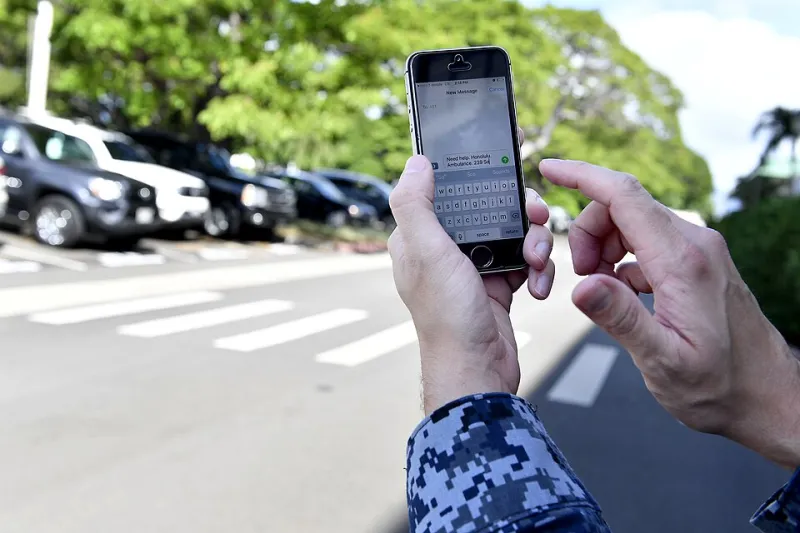
Photo: Petty Officer 2nd Class Johans Chavarro, Public domain, via Wikimedia Commons
Somewhere in Los Angeles right now, a famous person is typing a message they'll regret. They don't know it yet. They think that group chat — the one with the inside jokes and the lowercase texting and the one friend who only replies with memes — is a vault.
It is not a vault. It never was. And the past few years of leaks, screenshot scandals, and courtroom exhibits have made one thing abundantly clear: in Hollywood, the group chat is the new press release, except nobody signed off on it.
The Screenshot Industrial Complex
The mechanics are almost boringly simple. Someone in a chat hits a button. The message travels. Sometimes it goes to a journalist, sometimes to a lawyer, sometimes straight to a finsta with 40,000 followers and a bio that says "just here for the tea."
What's genuinely fascinating is the range of people willing to pull the trigger. We're not just talking about jilted exes anymore — though they remain the MVPs of the genre. We're talking assistants, business managers, longtime friends, and occasionally the celebrity themselves, who "accidentally on purpose" lets a flattering screenshot circulate like it's contraband.
And here's the kicker: the law is weirdly ambivalent about all of it. In most cases, if you receive a text, you can share it. Confidentiality agreements complicate things, and litigation over leaked communications absolutely happens — but proving who leaked what, from a chat with six participants, is a forensic nightmare. Entertainment lawyers have built entire careers on this ambiguity. The screenshot is nearly untraceable; the damage is instant.
Why They Keep Typing
You'd think the smart play would be silence. A phone call. A walk in the canyon. But celebrity culture runs on receipts now. A vague statement from a publicist means nothing; a text message where your rival says something unhinged at 2 a.m.? That's currency.
So stars keep typing, partly because everyone else does, and partly because texting is where their actual lives happen. You can't run a friendship, a feud, or a situationship through a press office. The vulnerability is structural — the same immediacy that makes texting feel safe (casual, ephemeral, just us) is exactly what makes it radioactive.
There's also a darker incentive loop at work. Leaked messages generate headlines, headlines generate leverage, and leverage generates settlements. Whether any particular leak is calculated or genuinely betrayed is often unknowable — and honestly, that ambiguity is part of the entertainment.
The Bigger Picture
What we're witnessing is the collapse of the last private space a celebrity had. The home has paparazzi drones. The restaurant has TikTok. The group chat was the final frontier, and it has fallen. Every star now operates under the assumption — correct, as it turns out — that anything they write could be exhibit A at a deposition or a viral post by Friday.
The irony? Fans claim to want authenticity, then weaponize every authentic thing that leaks. Celebrities claim to want privacy, then keep writing things they'd never say on a stage. Nobody's behaving well. Everybody's behaving human.
So the next time a fresh batch of celebrity texts drops and your feed lights up, remember: somewhere, a phone is buzzing in a very famous pocket, and someone is deciding, once again, that this message — this one, right here — is safe to send.
It never is. Pour one out for the group chat, folks. It was never really yours.